
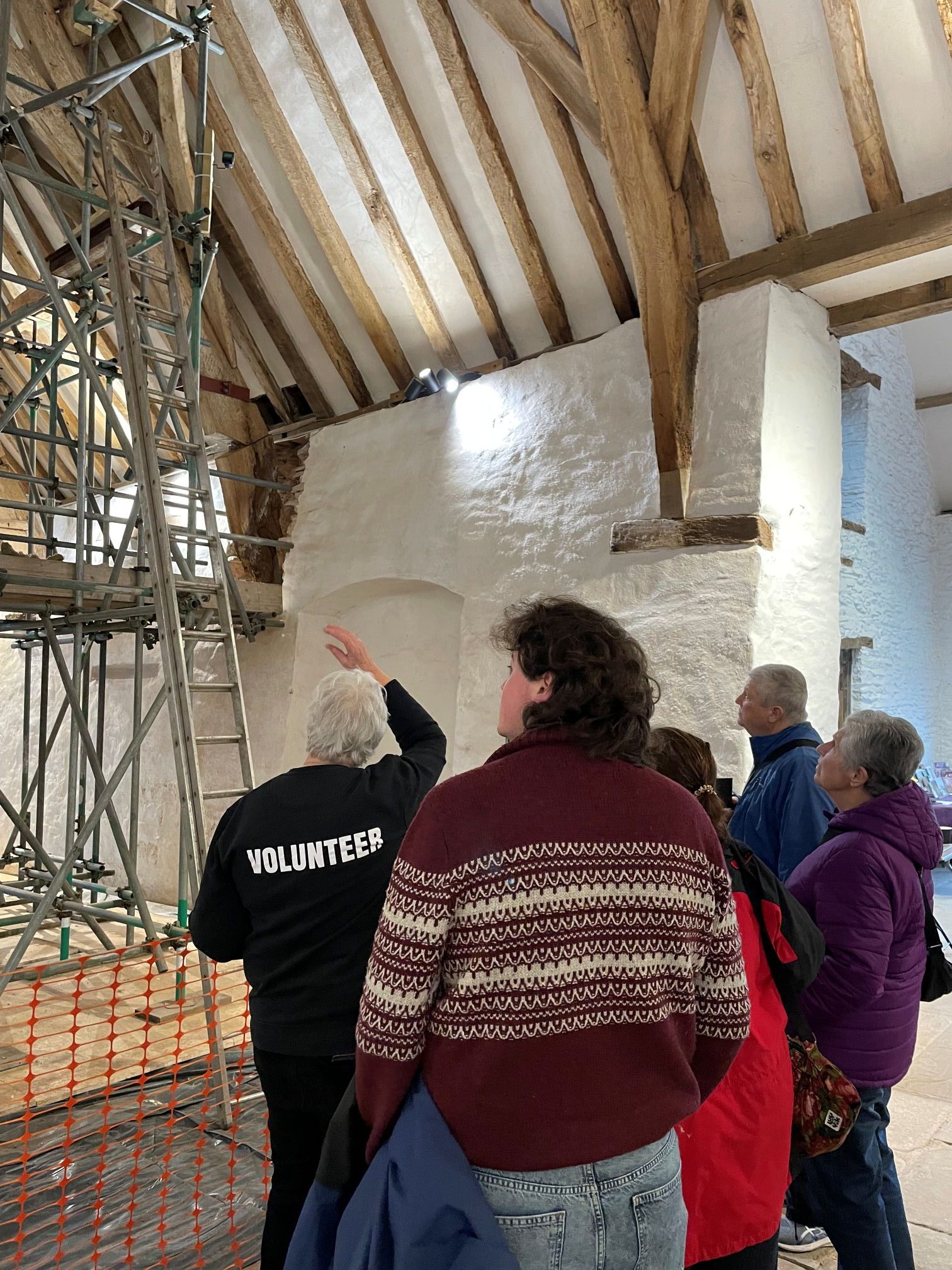
For almost 700 years, the great timber roof of Winterbourne Medieval Barn has sheltered generations of people, animals and stories. Now, thanks to vital conservation work, one of the Barn’s historic roof structures has been carefully repaired and secured for the future.
With support from The National Lottery Heritage Fund and Garfield Weston Foundation, Winterbourne Medieval Barn Trust has been able to carry out urgent repairs to one of the Barn’s medieval roof trusses, protecting this nationally important building and helping ensure it can continue to be enjoyed for generations to come.
Built in 1342, the Barn is a remarkable survivor. But caring for a building of this age means constantly balancing the need to protect its historic fabric while ensuring it remains safe, open and at the heart of the community.
Caring for a medieval masterpiece
One of the things that makes Winterbourne Medieval Barn so special is its extraordinary open interior. The vast, uninterrupted space is created by a series of raised cruck trusses (the impressive timber frames that support the roof).
These timbers were shaped by medieval carpenters using the knowledge and techniques available at the time. Nearly seven centuries later, preserving them remains one of the most important parts of caring for the Barn.
The recent repairs focused on one of the truss bearings (the point where the timber structure supports the roof). Over time, this area had suffered deterioration caused by deathwatch beetle and damp.
Rather than replacing the damaged section completely, the conservation approach was designed to retain as much of the original medieval timber as possible. A stainless steel flitch plate was carefully inserted within the timber, strengthening the structure while allowing the historic fabric to remain in place.
This type of repair is a great example of modern conservation: using carefully considered techniques to protect the past, rather than replacing it.
One of the challenges was safely supporting the roof while the work took place. Specialist shoring scaffolding was used to reduce the load on the affected truss, allowing the repair to be carried out while keeping the roof coverings intact.
The repair was designed by Mann Williams Consulting Engineers, specialists in conservation and heritage structures, and carried out by Corbel Conservation Ltd.

Finding the right materials
You won’t be surprised to learn that repairing a 700-year-old building comes with some unusual challenges. One of the biggest was finding oak that could be joined to timber that has been part of the Barn since 1342.
The repair timber was air-dried English oak from Devon, sourced from a tree felled in 2005. While the Barn itself was originally built using green oak, which gradually dried and shrank as the building settled over time, that wasn’t an option for the repair. Introducing freshly cut green oak alongside timber that has already spent centuries drying and stabilising could have caused movement and placed unnecessary stress on the original medieval structure.
Using carefully selected air-dried oak ensured the new timber was compatible with the centuries-old oak already in the Barn, helping to protect the historic fabric for years to come.
The work also provided a wonderful opportunity to pass traditional skills to the next generation, with much of the timber work carried out by an apprentice carpenter working alongside experienced conservation specialists.
Standing beneath the repaired truss, it’s hard not to marvel at the skill of the medieval carpenters who first built the Barn. Even after almost 700 years, the original oak remains incredibly solid—a testament to both the quality of the timber and the craftsmanship that has allowed it to endure for centuries.

Conservation in action
The Trust wanted this repair to be more than simply a building project. It was also an opportunity to share the process and help people understand the care and expertise involved in looking after historic buildings.
Two public open days gave visitors the chance to see the repair work first-hand. We were delighted to welcome visitors from across the region, many of whom had travelled specifically because of their interest in historic buildings and conservation.
The events led to fascinating conversations about different approaches to repairing historic structures—from traditional craftsmanship to the role of modern engineering in protecting heritage.
The Trust also invited universities and specialist groups to learn more about the repair. Students from the University of the West of England visited the Barn for a presentation from MannWilliams and Corbel Conservation, before seeing the work up close.

Creating a lasting record
The repair has also been captured for future generations.
Time-lapse photography recorded the different stages of the work, creating a permanent record of this unusual conservation project. You can watch the time-lapse of the repair here:
Heritage and nature together
The project also celebrated another important part of the Barn’s story – its connection with the natural world.
An Environment Day held in May 2026 welcomed visitors of all ages, with activities including bug hunting and identification, bug hotel construction and wildflower ‘bomb’ making. All with the aim of highlighting the importance of the local ecosystem.
The day reflected the wider role of the Barn as a place where history, nature and community come together.

Protecting the Barn for the future
Completing these repairs is a significant step in caring for Winterbourne Medieval Barn for the next 700 years.
The work has not only strengthened an important part of the building, but has also given the Trust greater confidence in its ability to look after this remarkable piece of heritage and continue welcoming visitors, volunteers and the wider community.
We are incredibly grateful to The National Lottery Heritage Fund and Garfield Weston Foundation for making this work possible, and to all the specialists, volunteers and visitors who helped support the project. Every repair like this helps ensure that the Barn’s story doesn’t end with us. Thanks to the support of our funders, specialists, volunteers and visitors, this remarkable building can continue welcoming future generations for many years to come.

